
What if the most neglected conditions were the greatest source of hope?

Unfortunately we don't fully support your browser. If you have the option to, please upgrade to a newer version or use Mozilla Firefox, Microsoft Edge, Google Chrome, or Safari 14 or newer. If you are unable to, and need support, please send us your feedback.
We'd appreciate your feedback.Tell us what you think!
April 7, 2026
By Ani Marrs-Riggs, Ann-Marie Roche

An advocate for rare-disease patients considers what it will take to turn one-off successes into platforms that treat multiple diseases.
Three hundred million people worldwide live with a rare disease. Nina Frost thinks that number alone should force a rethink of “rare” – and change how the field is funded.
Since our last conversation with Nina – president of the foundation RARE Hope and mother of a daughter with alternating hemiplegia of childhood (AHC) – there’s been a lot of good news. “We are really excited about some opportunities on our horizon. We’re at a critical inflection point to move things forward quickly and ultimately open the door for many more patients and many more conditions,” she says.
Despite these advances, funding remains critical for the rare disease community and language plays a key role here. Nina says
By labeling disorders ‘rare,’ we risk marginalizing their significance. That’s reflected in funding levels. After all, we are talking about a sizable population of patients.
Nina’s solution: stop calling them simply “rare diseases” and start calling them “genetic diseases”. Nina isn’t trying to discard the term “rare” entirely or diminish the existing rare disease community and its hard-won policy gains. She wants to ensure the “rare” terminology isn’t self-defeating, and shift the emphasis toward what these conditions represent – a vast frontier of biology, discovery and therapeutic innovation. She continued,
The rare disease world is dynamic and unique. Patient families are not just advocates; they can be builders and strategists. We should celebrate the exceptionalism of patient-led R&D and the direct connection between researchers and scientists.
We should present rare diseases not just as a challenge, but as an opportunity for medical breakthroughs and insights into human biology. I worry that in external messaging outside the rare disease community, ‘rare disease’ terminology, without the nuance, may undermine our efforts.
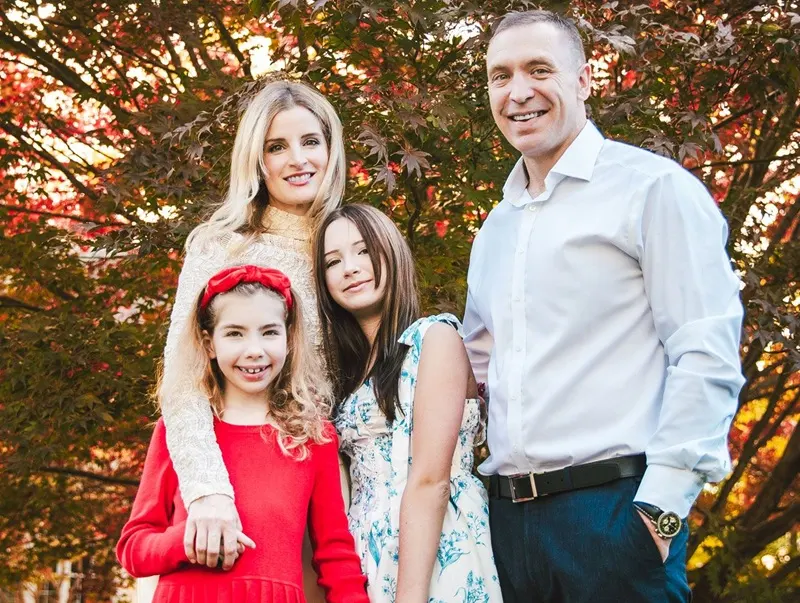
Nina Frost and family
Nina’s point is more than just semantics. Approximately 80% of rare diseases are monogenic, providing researchers with a clear genetic target and a roadmap for understanding the effects of mutations. “In these cases, there is a clear origin to everything that happens with that patient,” Nina explains. “That allows us to understand not only how to devise a potential genetic treatment for a condition but also illuminates so much more about human biology. A single gene mutation doesn’t just create a defect; it triggers a cascade of downstream consequences. The origin, as well as the sequelae, is incredibly informative across disorders.”
In other words, when you frame these conditions as “rare,” you’re signaling that they’re edge cases to funders and policymakers, or at least those outside the core rare disease ecosystem, and to the wider public. However, when you frame them as “genetic diseases,” you’re talking about fundamental human biology.
The cancer analogy is instructive, according to Nina.
“Cancer is now treated as a shared public mission, reinforced for decades by government infrastructure – a dedicated institute, designated centers, and national registries. Rare diseases are individually uncommon but collectively massive, yet they lack the same built-in scaffolding that turns economic burden into sustained investment. Reframing ‘rare’ may let us close the gap between relatively robust per-patient research funding for cancer, and relatively non-existent per-patient funding for ‘rare’ disease research.”
Meanwhile, it’s estimated 30 million people in the U.S. live with a rare disease, and 30% of patients diagnosed with a rare disease don’t live to see their fifth birthday. But the details aren’t well captured. “Critical to understanding the scale and the human impact is understanding the number of kids who die each year from complications of a rare disease,” says Nina. “This is tracked well for cancer, but less clearly for rare diseases. We are missing an opportunity to spotlight the heartbreaking magnitude here.”
With not every rare disease being monogenic, the rebranding question remains nuanced. For example, while ALS is considered a rare disorder, it has a genetic component in only a small percentage of cases. Even disorders with a monogenic origin can have unique biology. “Conditions are heterogeneous and variable, and we can’t dismiss the complexity,” says Nina.
“The goal isn’t to relabel every condition with genetic complexity but to shift emphasis to the opportunity that rare monogenic diseases provide across human biology. We can build a center of gravity for diseases where genetic insight can rapidly translate into treatment, and where implications extend beyond individual disorders.”
Meanwhile, the past year brought remarkable gene therapy successes – including baby KJ, whose life was saved by the first personalized CRISPR therapy, and Oliver Chu, a young boy successfully treated for Hunter syndrome.
These are the stories that demonstrate what’s possible – and inspire donors. After all, the same CRISPR techniques refined in trials like baby KJ’s could eventually treat common cancers.
However, it’s still a long road to turn these exceptional cases into systematic progress.
In late 2024, Nina and RARE Hope expanded their mission, moving beyond Nina’s daughter’s single disorder to address clusters of related genetic conditions. The organization now focuses on two main areas: consolidating data across genes and conditions with overlapping symptoms or mechanisms, and advancing platform-based therapeutics, such as gene editing and antisense oligonucleotide (ASO) programs. Nina explains,
Where one disease can go through a pipeline, similar conditions can follow. It can be a plug-and-play platform. You reprogram the system for the next gene mutation, and many more patients can be treated using the same approach – reusing the same delivery systems, regulatory logic and clinical infrastructure.
The question becomes: how do we reach a standard of care where patients can expect to access some of these increasingly mature treatments, which are perhaps not yet accessible? In other words, it’s the classic challenge of moving from innovation to scale-up, a scenario pharma knows well. And this is where therapy development for rare diseases has stalled in recent years.
Science is no longer the roadblock, Nina argues – access and cost are. But regulatory momentum is building. The FDA’s February 2026 draft guidance on the Plausible Mechanism Framework signals willingness to accept master protocols and a modular approach for gene editing products, which eases the regulatory burden and changes the economics: variant-specific patient populations can aggregate into something more commercially viable. In light of the new priority review voucher legislation, encouraging dynamics are at play.
There’s also growing interest in reframing genetic interventions using a surgical analogy – approved components, dispersed treatment centers, and decisions by treating clinicians rather than waiting for FDA approval for each specific use case. “I think it’s such a powerful analogy. The parallels are real: you can standardize the tools and the processes, but still tailor the intervention to the individual patient. That’s how surgery works. The goal is to make a genetic intervention as routine as a surgical one. There are risks. But these are risks that patient families and their treating clinicians are willing to take in the face of a dire situation.”
Meanwhile, other technologies, like AI, promise to advance therapeutic development across disorders. “The capacity of AI to analyze massive data sets is one of the most exciting transformations underway,” says Nina. Whether it’s multi-omic signatures for biomarker discovery or mining patient data across conditions to identify common therapeutic targets, the opportunity is enormous.
As cancer research has already shown, if rare and genetic diseases had a shared, structured dataset – integrating genomic data, natural history and treatment outcomes across conditions – AI could operate at a different level. A unified data infrastructure could dramatically expand AI’s analytic power, accelerating target discovery, biomarker validation and smarter trial design across disorders.
But validation takes time. “If you’re using AI to predict drug outcomes, some caution is required – there are vulnerable and potentially very sensitive patients you can’t just experiment on with new or even repurposed drugs without some plausible evidence.”
And even the best AI predictions require one thing rare disease research currently lacks: comprehensive data on what doesn’t work. Without shared records of failure, even the most powerful AI systems are trained on a distorted view of reality.
If you’re a rare disease organization with a limited budget and you decide to back a scientist with a great idea, but you don’t know that another scientist in another lab has tried it and it didn’t work, you might be able to tweak and redirect, or invest elsewhere, if you had known about that failure and its cause.
This insight aligns with what companies find when digitizing their legacy research archives: failures contain as much valuable information as successes, if not more. For rare disease research, where patient populations are small and funding scarce, repeating a failed experiment isn’t just wasteful – it could cost a patient years they don’t have.
Recently, RARE Hope raised $1.3 million at a 500-guest gala at the National Cathedral, held the day after Jane Goodall’s memorial in the same space. “As Dr Goodall said, hope is not about wishful thinking, but it’s actually about action,” notes Nina.
“For me, 2025 underscored the gap between these one-off success stories and the future we’re trying to build, where we can treat multiple patients for multiple conditions through an established process and a tried-and-tested pipeline.”
Despite the funding gap, there’s reason for optimism. “What’s really great about the rare disease world is that people are passionate, smart and collaborative, and they want to help one another,” Nina observes. “Sharing across conditions and organizations is so critical going forward.”
Building new systems requires a broad approach that includes better data sharing (including failures) and better funding. And yes, changing the word “rare” to “genetic” when appropriate may help unlock systems that can scale. As Nina stresses, “The learnings in rare diseases translate across all of medicine. The innovation that is happening in this space is relevant to every single person in this world.”
The question isn’t whether the science exists. It’s whether we’re willing to build the systems that allow it to reach everyone who needs it.
Watch the Elsevier seminar AI in action: impact and potential for effective drug repurposing featuring Nina, along with Every Cure’s Dr. David Fajgenbaum, Cara O’Neill from Cure Sanfilippo Foundation, and moderated by Tom Woodcock from Elsevier Professional Services.


Senior Director of Customer Engagement Marketing
Elsevier
Read more about Ann-Marie Roche