
Series Editor
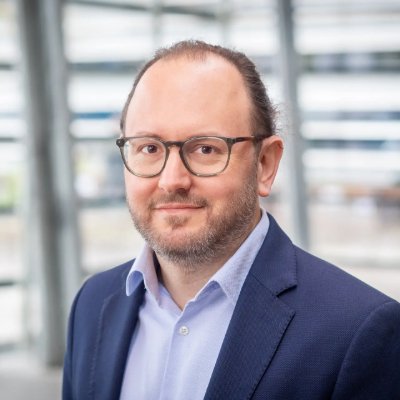
Prof. Dr. Can Dincer
Associate (W3) Professor
Technical University of Munich, Germany
E-Mail Prof. Dr. Can DincerProf. Dr. Can Dincer is an Associate Professor of Sensors and Wearables for Healthcare at the Technical University of Munich (TUM) since October 2024. The research interest of his group is the development of bioanalytical materials, sensors and microsystems, as well as their combination with data science and artificial intelligence for One-Health: human and animal health, and the shared environment. His focus is on disposable sensing devices for point-of-need testing and wearable applications.
Having completed his studies in microsystems engineering, Prof. Dincer graduated from the Technical Faculty of the University of Freiburg, Germany. He received his PhD degree with summa cum laude in 2016. Between June 2017 – June 2019, he worked as a visiting researcher at the Department of Bioengineering at the Imperial College London, UK. Since September 2019, Prof. Dincer is an Associate Editor of the journal "Biosensors and Bioelectronics” (Elsevier). He is also editorial board member of the journals “Advanced Sensor Research” (Wiley) and “The Innovation Materials” (Cell Press). Up to date, Prof. Dincer has received different awards and prices for his research and contribution to the field of biosensors and analytical chemistry. He is a member of the German Society for Biomedical Engineering (VDE|DGBMT), American Chemical Society, International Society of Electrochemistry (ISE) and the Society for Electroanalytical Chemistry (SEAC).