
Working together to improve access to scholarly content for people with disabilities
22 de mayo de 2026
Por Linda Willems
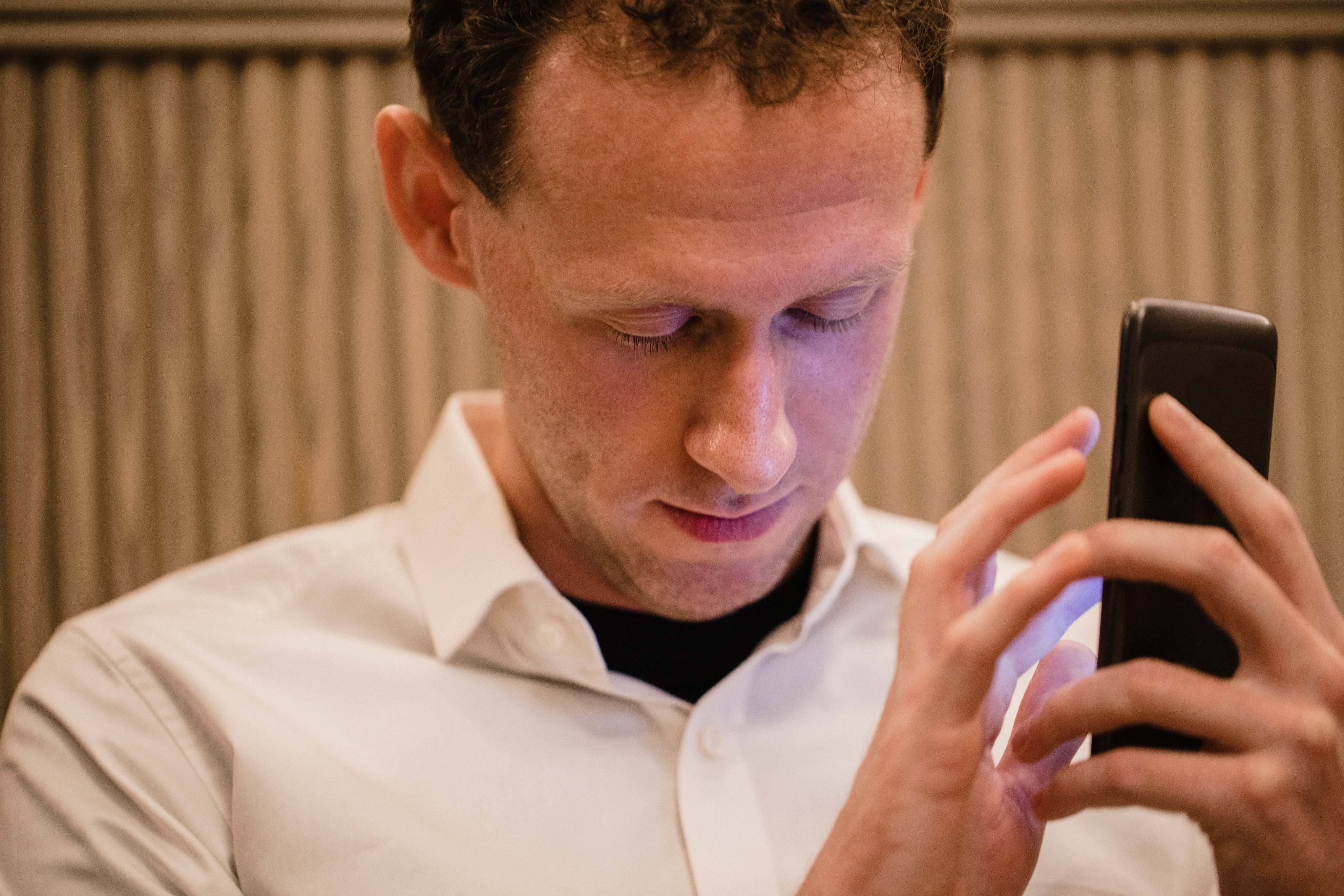
As preparations for new US legislation continue, two accessibility experts share best practice tips for libraries and reflect on the importance of collaboration.
Studies suggest that more than 1 in 6 adults in OECD member countries have a disability1, rising to 1 in 4 in countries like the US.2 Yet, all too often, content is published in formats they can’t consume. For example, the World Blind Union estimates that less than 10% of all published materials can be read by blind or low vision people.3
“That means more than 90% of content is inaccessible,” points out the Association of Research Libraries’opens in new tab/window Katherine Klosek. “And that has enormous implications. For example, for students, even a week’s delay in getting access to the material they need to complete a course assignment can cause them to fall behind classmates.”
While legal requirements to improve disability access have been in place since the 1970s, recent years have seen additional legislation introduced to reflect the digital era. For example, in 2025, the European Accessibility Act (EAA)opens in new tab/window was implemented, requiring member states to improve access to products and services – including eBooks and eCommerce solutions. And the first phase of Title II of the Americans with Disability Act (ADA)opens in new tab/window is due to come into effect in the spring of 2027, requiring US colleges, universities and other public entities to make their websites and mobile apps accessible.
As Simon Holt, Elsevier’s Senior Head of Content Accessibility, explains: “These acts are all designed to create a more level playing field so that everybody has equality of opportunity.”
But although the ADA legislation will place the burden of compliance on public entities such as universities – and by extension, their libraries – Simon strongly believes that publishers have an equally important role to play.
“Where do these organizations purchase and license their content from? Companies like ours. So, if our mission as an industry is to disseminate content that furthers knowledge, it's important everybody has access to it. And the way to do that is to build it in from the beginning – remediating published content is very difficult.”

Simon Holt Senior Head of Content Accessibility at Elsevier
As someone with a visual impairment himself, Simon understands all too well the frustration and problems that content barriers can generate. So, to help prepare for ADA Title II, he convened the Elsevier Library Accessibility Advisory Board with 11 US librarians to sense check Elsevier’s accessibility strategy. “Their input has been helping us ensure we are addressing the needs of the most important people – those who read and learn from our material. And meetings offer a safe space where we can collectively problem solve. Because this accessibility stuff isn’t easy – it’s complex, challenging and it’s not a one and done kind of thing; it’s ongoing.”
The power of partnership
Crucially, the board reflects Simon’s belief that advancing accessibility requires everyone to come to the table – not only law makers, but libraries and publishers too. “Accessibility isn’t a competitive sport. Everybody in the industry needs to understand what content accessibility is so we can work together to achieve it,” he explains.
It’s a view shared by Elsevier Library Accessibility Advisory Board member Katherine. Her role as Director, Information Policy and Federal Relations with the Association of Research Libraries (ARL) includes advocating for policies that improve accessibility for people with disabilities.
“I connected with Simon a couple of years ago when the final rule for the Title II update to ADA was released,” Katherine recalls. “It talked about increasing demand for accessible content from third-party vendors, and therefore increasing the number of third-party vendors equipped to provide accessible content.
“While ARL welcomed that idea – and even mentioned it in our comments to the US Department of Justiceopens in new tab/window to inform the Title II rule – we also knew it wouldn't just happen without discussions between publishers and libraries. So, we've been working together ever since to model and reflect the kinds of conversations we think libraries and publishers need to have.
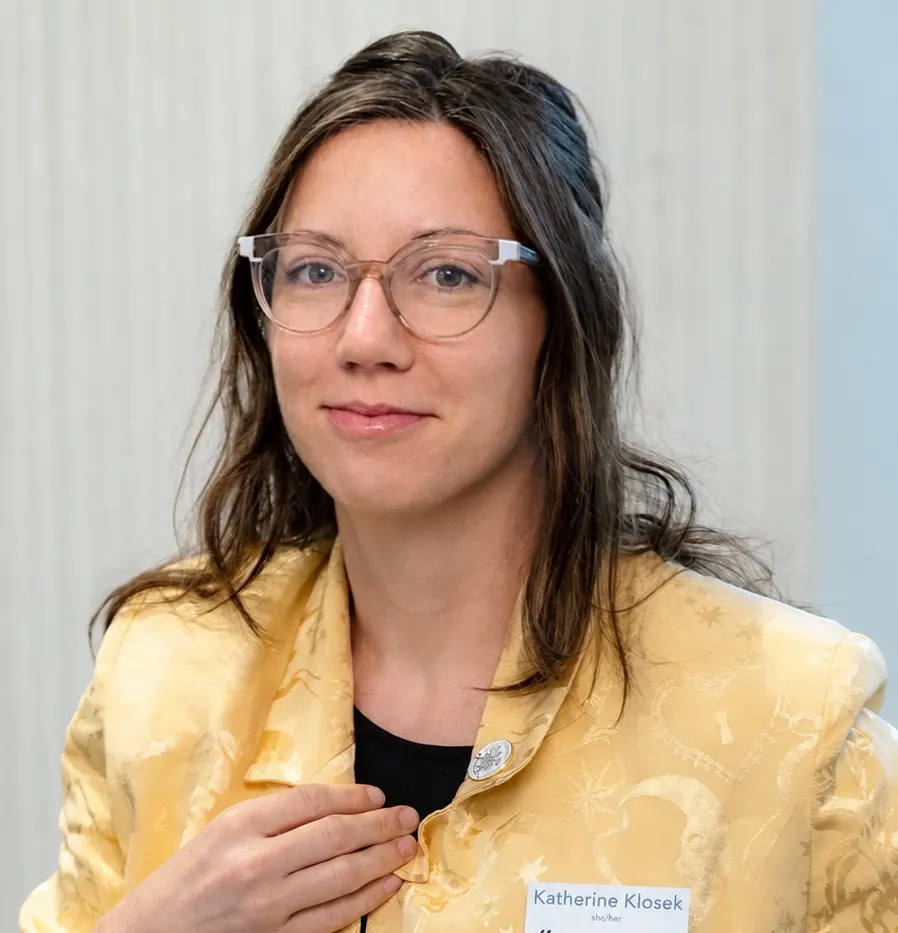
Katherine Klosek Director, Information Policy and Federal Relations at Association of Research Librariesopens in new tab/window
“For me, the Elsevier Library Accessibility Advisory Board is one aspect of that modeling. We listen to updates from Simon and his colleagues. We provide feedback on things like accessibility statements. And more importantly, we share ideas on how to advance these library/publisher conversations. As Simon says, libraries and publishers should be partners – we want the same things.”
Simon adds: “One message I’d love to get across is that we really want librarians worldwide to speak with us and other publishers. And please don’t assume that we will respond to requests for accessibility with reluctance. Advocates like Katherine and me want people to move from thinking about accessibility as a cost and compliance thing to seeing it as an investment and opportunity thing. From Elsevier’s perspective, it adds value to our content and it's core to our mission. We take accessibility seriously and we want to work with others who feel the same way.”
Demystifying disabilities
Content accessibility is for readers:
With limited or no vision
With limited manipulation, strength or reach
Who are neurodivergent
Who have photosensitive seizures
With limited cognition
Without perception of color
With limited or no hearing
Without vocal capability
Closed captions can also be helpful for people who are viewing a video in a language that isn’t their mother tongue.
Disabilities can fall into three categories:
Situational. Example : A loud environment
Permanent. Example: A long-term disorder
Temporary. Example: An injury that will heal
Making Elsevier content globally accessible
Regulations like ADA and EAA are built upon the Web Content Accessibility Guidelines (WCAG)opens in new tab/window by the World Wide Web Consortium (W3C), which seek to make content more accessible to people with disabilities. For example, ADA Title II sets WCAG 2.1 AA as the technical standard for web content and mobile apps. And Elsevier has adopted the same WCAG standard across its business. According to Simon, what this means in practice is that all new books and journals Elsevier publishes comply with a comprehensive set of requirements. For example:
Text descriptions (Alt text) are provided to explain the content of images for people using screen readers.
Videos have captions, transcripts and text descriptions that explain both its audio and visual content.
PDFs are tagged for optimization with screen readers and other assistant technology.
Books are published in the .EPUB format.
In addition, 8,000 of Elsevier’s most used backlist books have been made accessible and Simon and his team have launched a new Elsevier service, which enables people to request that other legacy items are remediated too. “Our goal is to deliver the accessible version to them as soon as we can – the turnaround time is normally a couple of weeks – and then that accessible version becomes the default version on ScienceDirect. This method enables us to prioritize the backfiles that people are actually using. We are also updating the accessibility of our platforms and products.”
Elsevier has published a statement detailing its response to ADA Title II, which builds on its broader Accessibility Policy. Regular Accessibility Conformance Reports (ACRs) are also published, showing how Elsevier products perform for people with disabilities.
But one of the ADA Title II changes that Simon is most excited about is the introduction of accessibility metadata for books and journals. This enables users to check on a content item’s accessibility features before they purchase or download it.
He explains: “On a personal level, I'm sick and tired of spending time and money accessing various things then discovering I can’t use them. This is a step towards making sure that irrespective of disability, everyone can read, learn, understand and fulfil their potential. And if that doesn't get us excited, then what are we doing as educational professionals?”
And, as Simon points out, by complying with ADA Title II, Elsevier is not only meeting accessibility requirements in the US – it’s also aligning with the growing volume of national and regional laws that use WACG standards globally.
Preparing for ADA Title II
ARL, a nonprofit association of major research libraries in Canada and the US, has also been busy working with its members to ready content and strategies for ADA Title II.
“Alongside submitting comments to the Department of Justice to help shape the ruling, we’ve been encouraging libraries and archives to engage with publishers,” Katherine says. “We have also been collecting and sharing promising practices among our member libraries.”
ARL has been creating space for its member representatives – Deans and Directors of research libraries – to talk about accessibility. Katherine explains: “This convening role of ARL is important because our members have a unique seat at the table. They are not only overseeing what's happening in their own libraries and teams, they are also in discussions with other leaders in their institutions and can share unique insights into things like resources and prioritization.”
What Katherine has learned during those discussions is that many of ARL’s member libraries have already made good progress toward ADA Title II.4
“Libraries have long been committed to accessibility, so they started from a really good place. They have completed the first steps and are now starting to remediate non-compliant content.”
She adds: “But we definitely are seeing more collective action, with libraries working together to meet not only Title II requirements, but state requirements, where applicable.” Katherine hopes this collaboration could lead to new infrastructure emerging. “That's something libraries are really good at doing in situations like these – building tools and platforms we can all use to share knowledge and information.”
For libraries that are still working toward ADA Title II, Simon and Katherine recommend the following steps:
Assess the WCAG 2.1 Guidelines and audit your existing approaches against the AA criteria.
Pay particular attention to guidelines around:
Images
Multimedia (video and audio)
Metadata
Accessible formats (PDFs and EPUBs)
Think about the full range of content affected. In addition to third-party resources, the regulations cover library websites, LibGuides, any digitized content, mobile apps, learning platforms, classroom resources, social media and more.
Prioritize backlist content according to demand/usage.
Aim for maximum transparency. Keep your Accessibility Statement updated and explain what steps you are taking and why.
If you can’t remediate everything at once, establish a roadmap so everyone knows what will happen when and provide information on how library users can request remediated content in the meantime.
They have also highlighted some helpful resources:
Department of Justice factsheetopens in new tab/window on ADA Title II
Dear Colleague letteropens in new tab/window from the Library Accessibility Alliance – a lobby group representing several major library consortia. The letter sets out the steps that libraries, publishers and public entities must take to comply with the regulations.
Library Accessibility Alliance resource pageopens in new tab/window, which includes helpful assessment resources.
Blog seriesopens in new tab/window published by the Law Office of Lainey Feingold, which offers a breakdown of the changes for non-legal audiences.
Blog postopens in new tab/window by accessibility consultant Bill Kasdorf for the DAISY Consortium on ADA Title II readiness.
Videoopens in new tab/window by Association of Research Libraries (ARL) in which librarians, lawyers and disability rights advocates discuss how libraries can “understand and respond to Title II as an opportunity to more fully lean into our values as information professionals” (Liz Lorang, Dean of University Libraries at University of Nebraska-Lincoln).
ARL-published book eResource Licensing Explainedopens in new tab/window, which includes model language and strategies that libraries can use in negotiations for accessible eResources.
Help us advance accessibility
Now that work has progressed toward ADA Title II, Simon would like to expand membership of the Elsevier Library Accessibility Advisory Board beyond the US. He says: “If any librarians reading this would like to join or just learn more, I would be delighted to hear from them.” You can email Simon at [email protected]opens in new tab/window.
References: 1. Disability, Work and Inclusion - Mainstreaming in All Policies and Practices. (2022). OECD. https://doi-org.ucc.idm.oclc.org/10.1787/1eaa5e9c-enopens in new tab/window 2. Chronic Disease Indicators. U.S. Centers for Disease Control and Prevention (CDC). https://www.cdc.gov/cdi/indicator-definitions/disability.htmlopens in new tab/window 3. Accessible Books Consortium (ABC) homepage. https://www.wipo.int/en/web/abc/portal/indexopens in new tab/window 4. The original planned implementation date for the regulation was 24th April 2026. The US Department of Justice recently announcedopens in new tab/window a 12-month extension for public entities with a total population of 50,000 or more, and a 24-month extension for those with populations under 50,000. |
|---|
Contribuidor
