
Beyond the Campus: How the urban research university is redefining impact
18 mai 2026 | Lecture de 5 min
Par Dr Reginald DesRoches
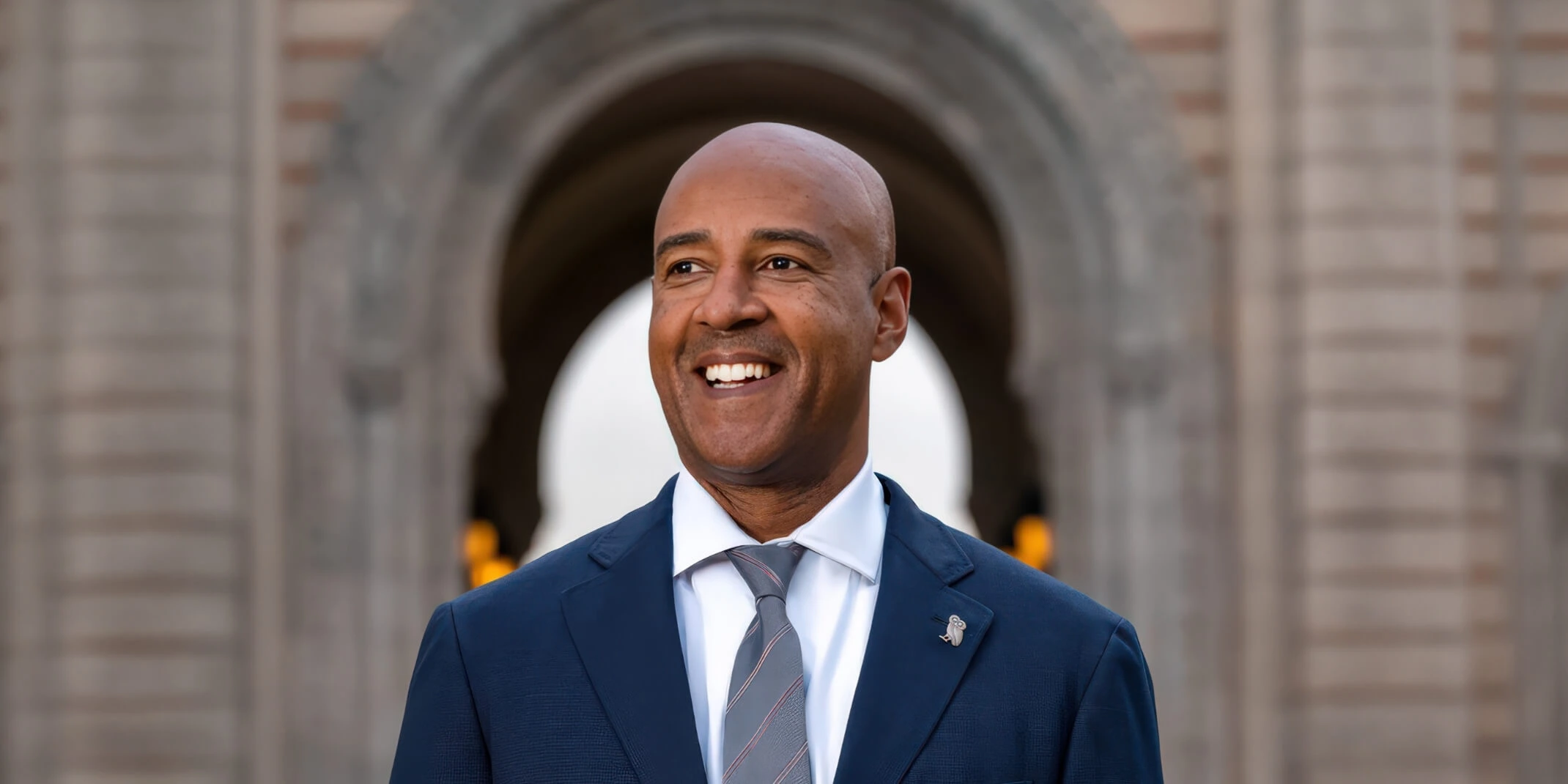
For much of their history, research universities have been defined by what happens in laboratories, lecture halls and libraries, places where discovery begins. That work remains essential. But today, the world’s most pressing challenges — from public health crises and climate resilience to education equity and energy security — extend beyond campus boundaries. They unfold in communities, cities and global systems where universities are embedded.
That reality is reshaping the role of the modern research university.
Today’s universities are called to do more than generate knowledge. We are expected to help turn discovery into solutions faster, at scale and in partnership with a broader set of collaborators. The emerging model is what I call the “urban research university”: an institution deeply immersed in its city, working across sectors and continents to translate research, discovery and creative works into real-world impact.
At Rice University, we are fortunate to be in Houston — one of the most dynamic and diverse cities in the world. Houston is the global energy capital, home to the largest medical center and a hub for space exploration, advanced manufacturing and emerging technologies. It has the third largest number of Fortune 500 companies of any city in the U.S. As a large coastal region, Houston reflects both the opportunities and challenges facing urban centers worldwide.
This environment gives us something invaluable: a living laboratory.
Houston allows us to test ideas in real-world conditions — to partner with industry, government, health systems, nonprofits and communities to develop, refine and scale solutions that can improve lives not only locally but globally. What we learn here informs approaches that can be adapted in cities around the world.
Being embedded in a city like Houston also changes how we think about our educational mission.
Our students are not learning in isolation; they are engaging with real-world challenges alongside community partners — working with school districts, contributing to civic initiatives and launching entrepreneurial ventures. In doing so, they gain the skills and perspective needed to lead in complex times.
From discovery to deployment
The traditional model of research — discovery first, application sometimes years later — is no longer sufficient. Today’s challenges demand a shorter distance between discovery and implementation.
At Rice, we are building what I call the “connective tissue” linking foundational research to real-world outcomes. That means creating pathways where ideas can be tested, refined and scaled in partnership with those who will ultimately use them, — whether city agencies, hospital systems, school districts, startups or global corporations.
This approach is visible in the innovation ecosystem we’ve developed in Houston.
Our 16-acre Ion District, serves as a hub where researchers, entrepreneurs, companies and community organizations come together to move ideas from the lab into the marketplace,. It creates connections across sectors that might not otherwise intersect: energy companies with AI startups, health innovators with investors and students with industry leaders.
Separately, the Rice Alliance for Technology and Entrepreneurship has supported more than 3,500 companies over the past two decades, helping them raise nearly $28 billion in funding.
Rice is also positioning itself at the intersection of technology, innovation and sports. One of the best examples of this work is the Houston Methodist–Rice University Human Performance Center, located right here on our campus. The center brings together physicians, academic researchers and students alongside athletes, trainers and coaches to advance the science of human performance.
This model is not theoretical — it’s translational. It connects discovery to application in areas like injury prevention, rehabilitation and peak performance. It directly supports Rice student-athletes and extends beyond campus. We’re partnering with organizations like the Houston Astros, Houston Texans, the Houston Ballet and the Houston Symphony. At its core, this is a collaboration around movement — and a great example of how Rice serves as a convener across disciplines and industries to solve real problems.
That spirit of collaboration extends to global events. As an Official Houston World Cup 2026 Host City Supporter — the only university in the country with this designation — Rice is helping prepare for the world’s largest sporting event.
Partnership as a core competency
If the urban research university is defined by anything, it is partnership.
No single institution can address today’s challenges alone. Progress requires collaboration and new ways of working together.
In Houston, those partnerships take many forms.
Our work with the Texas Medical Center — the largest medical complex in the world — enables breakthroughs in areas ranging from cancer research to bioengineering and brain health. These collaborations allow us to pair scientific discovery with clinical application, accelerating the development of treatments that can improve and save lives.
In the past two years, Rice has launched multiple joint institutes, including the Digital Health Institute with Houston Methodist, the Rice/MD Anderson Cancer Bioengineering Collaborative, the Institute of Health Resilience and Innovation, the Medical Humanities Institute and the Synthesis X Center with Baylor College of Medicine.We also see the power of partnership in education and local government.
During the COVID-19 pandemic, Rice environmental engineers and statisticians partnered closely with the city of Houston, Harris County, local hospitals and public health officials, to implement a novel approach of using wastewater to predict outbreaks of COVID-19, weeks before the outbreaks would occur in the hospital. This collaboration, which was instrumental to Houston’s response to the pandemic, demonstrated how universities can serve as trusted partners in moments of crisis offering not only expertise but actionable insights and technologies that help communities respond effectively.
Research conducted by Rice’s Kinder Institute for Urban Research played a key role in shaping statewide policy on early childhood education. By analyzing the impact of full-day, pre-K programs in Houston, our researchers helped demonstrate significant gains in school readiness particularly for students who need it most. That evidence helped expand access to full-day pre-K across Texas, unlocking billions of dollars in state support, improving outcomes for countless children.
This is what impact looks like when research meets partnership: not just publication but policy, action and change.
Scaling solutions for global impact
One of the defining advantages of working in a city like Houston is scale.
Houston is large, diverse and globally connected — a microcosm of many of the challenges facing cities worldwide. That makes it an ideal environment to develop solutions that can be tested at scale and then adapted elsewhere.
If you want to have real impact — impact that extends beyond a single community — solutions must be scalable.
We see this clearly in areas such as climate resilience and disaster response. Rice’s Severe Storm Prediction, Education and Evacuation from Disasters Center has developedthe FloodInformation and Response System, which provides real-time flood warnings using advanced modeling and data integration. Originally designed to protect critical infrastructure in the Texas Medical Center, FIRST is now being deployed more broadly across Texas and has the potential to serve communities across the country.
Similarly, Rice’s work in energy and climate — in partnership with industry — is advancing cleaner, more resilient energy systems. Houston’s dual role as energy capital and innovation hub makes it an ideal platform for solutions that are both economically viable and environmentally responsible. The Ion District now includes Greentown Labs, North America’s largest climatetech startup incubator.
Redefining what it means to be a university
As universities take on this expanded role, they must also embrace a broader sense of responsibility.
It is not enough to innovate; we must ensure that innovation is inclusive, ethical and aligned with the needs of society. That means expanding access to education, fostering diverse perspectives and engaging communities as partners, not just beneficiaries, of research.
The urban research university is not a departure from our core mission — it is an evolution.
Foundational research will always be at the heart of what we do. But today, the measure of success is not only what we discover, but how those discoveries improve lives.
At Rice, we are working to redefine what it means to be a leading urban research university — pairing excellence with access, discovery with impact and ambition with responsibility.
Houston provides the context, the partners and the scale to make this possible. It challenges us to think bigger, act faster and collaborate more deeply.
And it continuously instills in us that the true value of a university lies not in what happens on campus but in the difference we make beyond it.
Contributeur
DRD
Dr Reginald DesRoches
President, Rice University