
“…Reaxys gives us confidence we won’t miss critical insights.” — Dr Christine Richardson, Sygnature Discovery

很遺憾,我們無法支援你的瀏覽器。如果可以,請升級到新版本,或使用 Mozilla Firefox、Microsoft Edge、Google Chrome 或 Safari 14 或更新版本。如果無法升級,而且需要支援,請將你的回饋寄給我們。
我們衷心感謝你對這個新體驗的回饋。告訴我們你的想法打開新的分頁/視窗
Reaxys® integrates AI with over one billion trusted chemistry data points, so chemists can enhance discovery, synthesis planning, and competitive and IP intelligence.
Get ready for the future of chemistry with Reaxys.

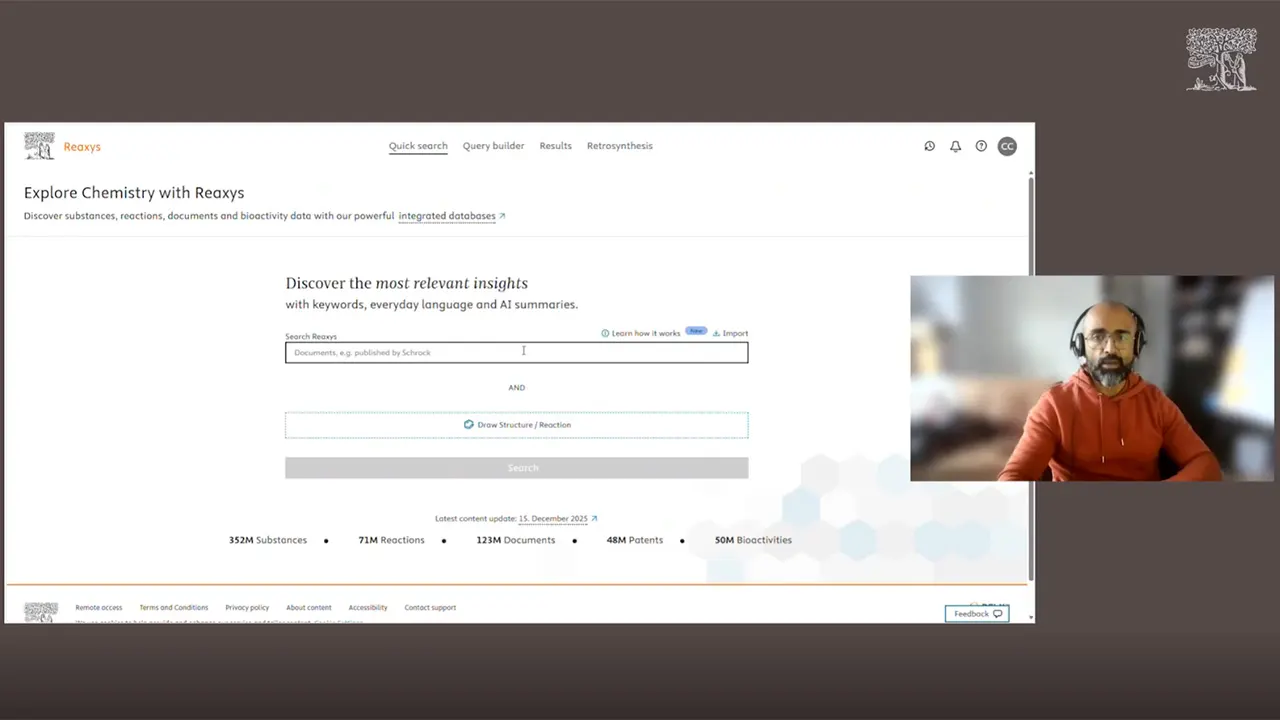
Reaxys now combines keyword search with AI’s natural language processing to quickly surface relevant insights from millions of peer-reviewed journal articles and chemistry patents.
AI-generated summaries in Reaxys highlight the most relevant findings and provide references, so you can easily explore original sources and validate results. Responses are grounded in high-quality scientific data.
Chemists, scientists and engineers across pharmaceutical, biotech, chemicals and materials science use Reaxys to support innovation with greater confidence.
Learn how Elsevier supports responsible AI development and protects data privacy in Reaxys.
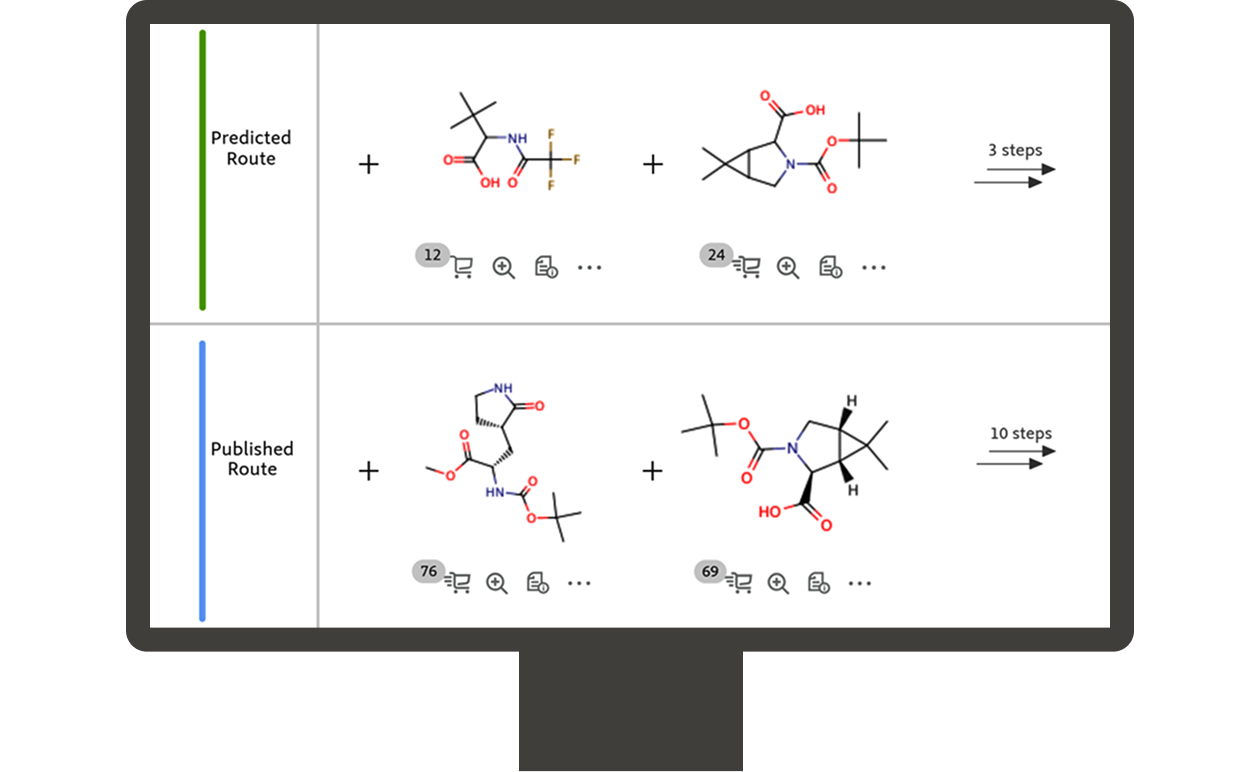
Reaxys Predictive Retrosynthesis offers AI models from Iktos and Pending AI, so that chemists can quickly predict synthesis routes. The AI models are based on 420,000+ expert rules and trained on high-quality reaction data from Reaxys.
“As AI continues to shape the future of scientific research, we are confident that Reaxys offers the most advanced retrosynthesis technology available,” said Colin Sambrook Smith, Sygnature Discovery’s Director of Computational Sciences and Informatics.

Reaxys uses AI-based data extraction to transform unstructured chemistry information into structured, usable chemistry data at scale. Along with expert oversight, this process provides current, comprehensive evidence for decision-making in chemistry research and chemicals R&D.
With data and analytics from LexisNexis® PatentSight®, Reaxys delivers a comprehensive view of patent ownership and inventorship.

High-quality Reaxys chemistry data is available for AI applications, such as knowledge graphs, predictive models and new molecule design.
Reaxys data has flexible delivery options: a reaction flat file, targets and bioactivity flat file, structure flat file and the Reaxys API.
Reaxys data can be integrated with in-house data, such as ELNs, and external data for a broad view of the chemistry landscape.
